Designing AI-powered patient simulator tool for clinical skills practice
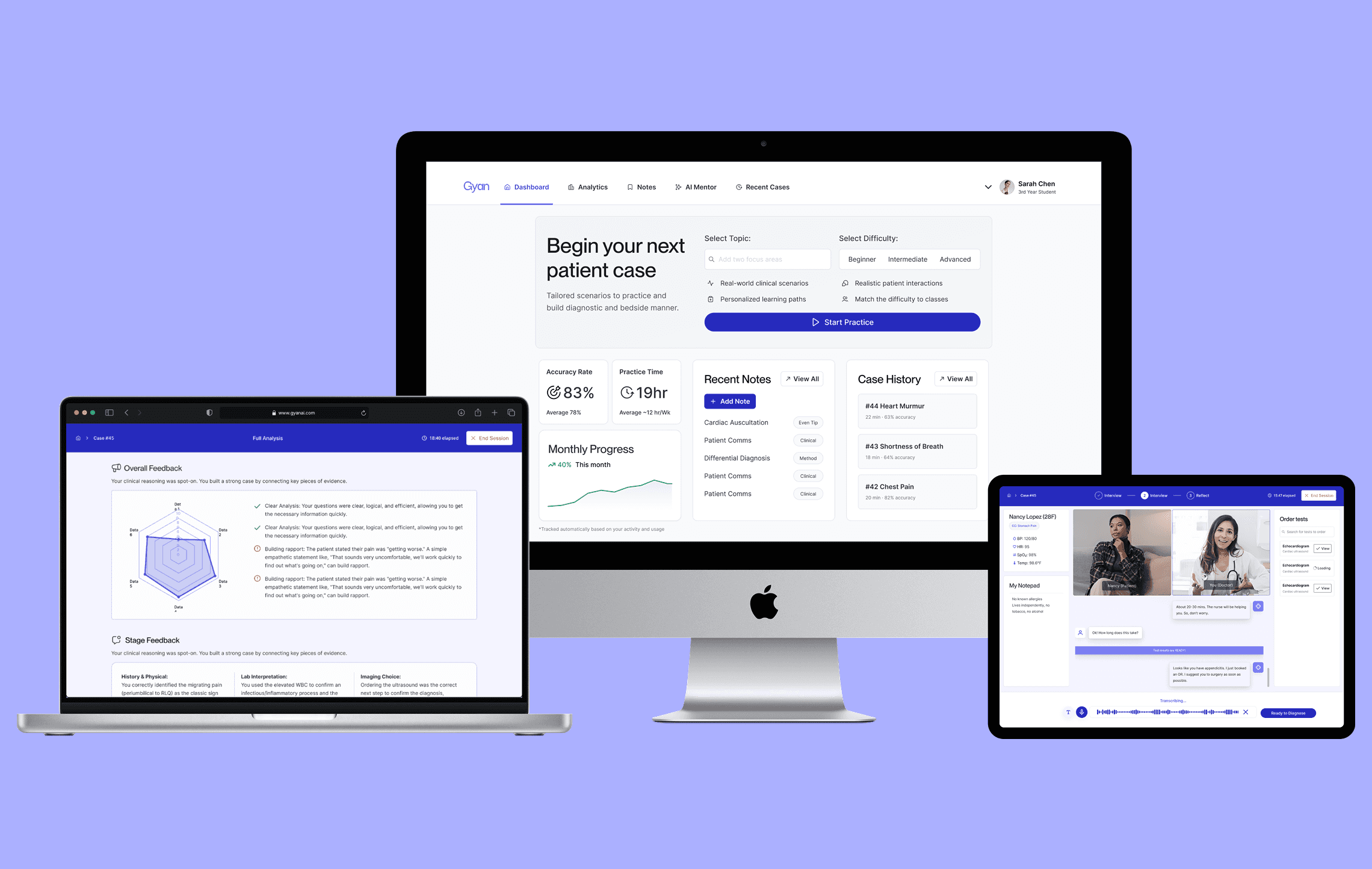
Gyan AI is a 0-to-1 product designed to close the gap between medical education and clinical practice, giving students a safe space to practice patient interviews and build diagnostic reasoning before they're in front of real patients.
IMPACT
PROBLEM
Med students drop out due to differences between theory and reality of clinical practice
Clinical skills can only be mastered through hands-on practice. But the medical education still relies on outdated passive learning methods, leading to students often waiting until they are facing real patients to practice.
Refers to textbook examples

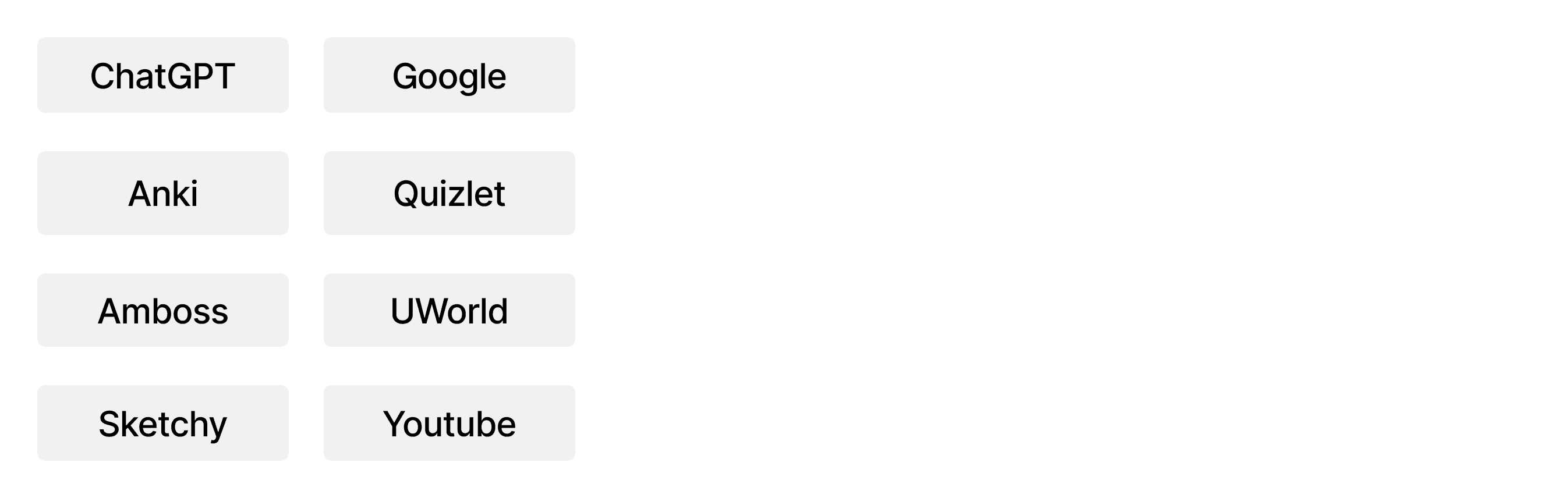
Looks up 10+ apps to learn

Struggles to interview the patient

Struggles to diagnose

Gyan bridges the gap between theory and real practice
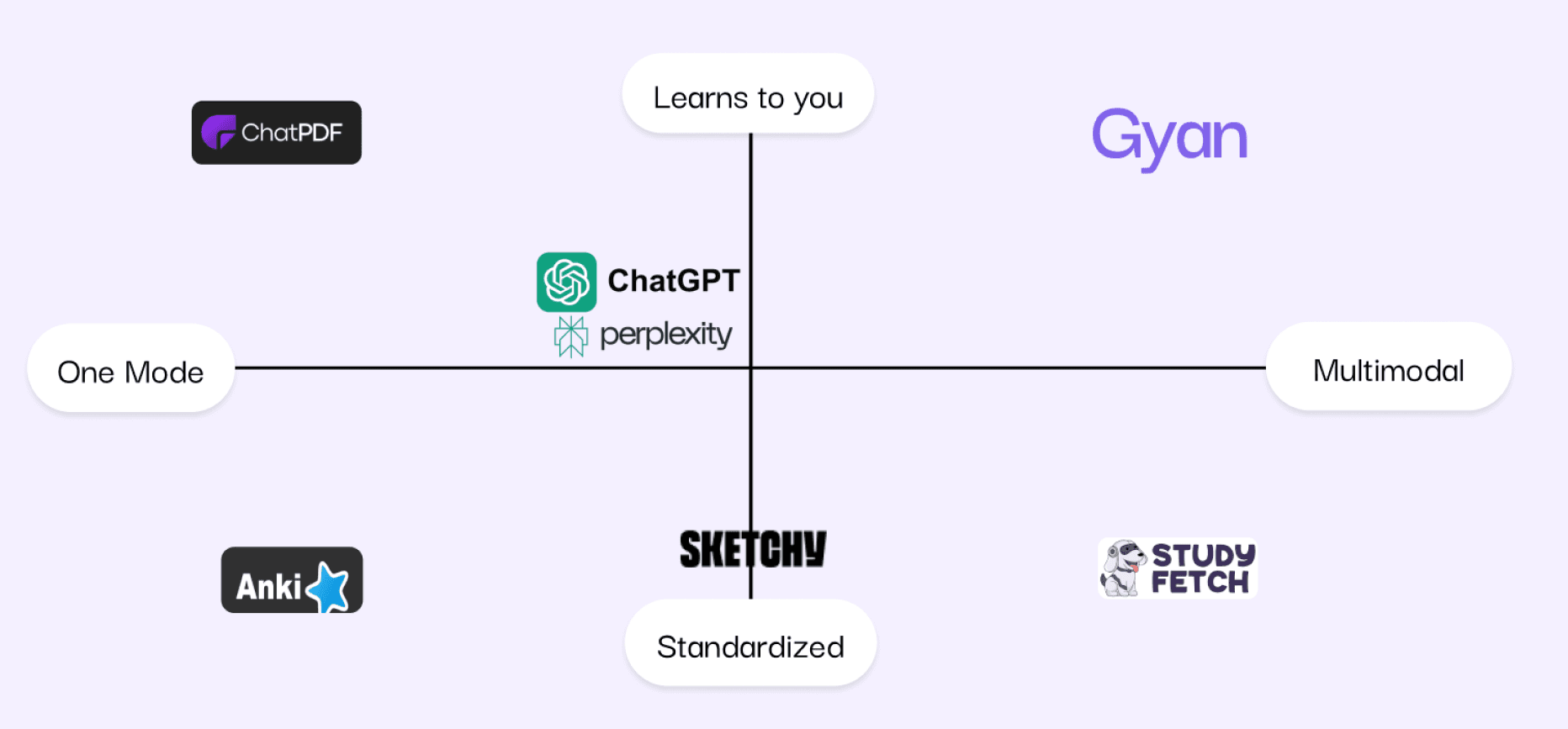
Existing tools test knowledge through different forms like quizzes, flashcards memorization, question banks, videos etc. But none of them address the theory to practical gap.
WHO WE ARE DESIGNING FOR?
Designed for students who want hands-on learning
Second and third year medical students preparing for clinical rotations. They spend years memorizing symptoms and passing exams, but have never had a real conversation with a patient. They know the theory but don't know how to convert it to real life.

3rd year medical student
"I keep practicing my clinical skills on my roommate, but it's not the same and I feel very unprepared for my OSCE Test"
2nd year medical student
PROBLEM STATEMENT
How might we provide medical students a safe space to practice clinical skills before they're in front of real patients?
Key constraints: To be designed in 4 months. With no existing problem research, direct competitors, or user data.
DESIGN EVOLUTION
V1: A case library where students pick a patient and practice
Patient choice upfront created overwhelm and confusion. Students spent more time exploring patients instead of practicing.
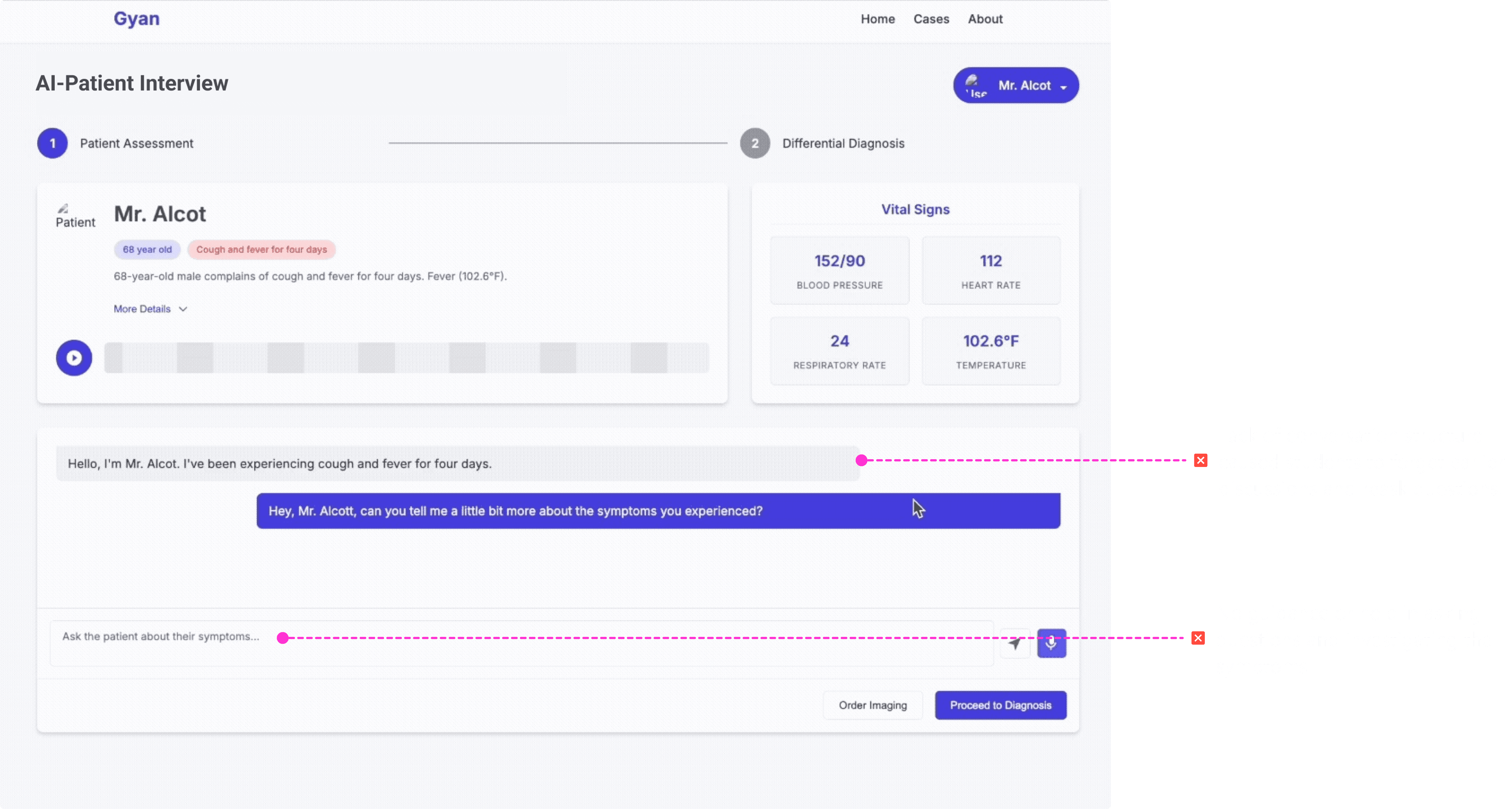
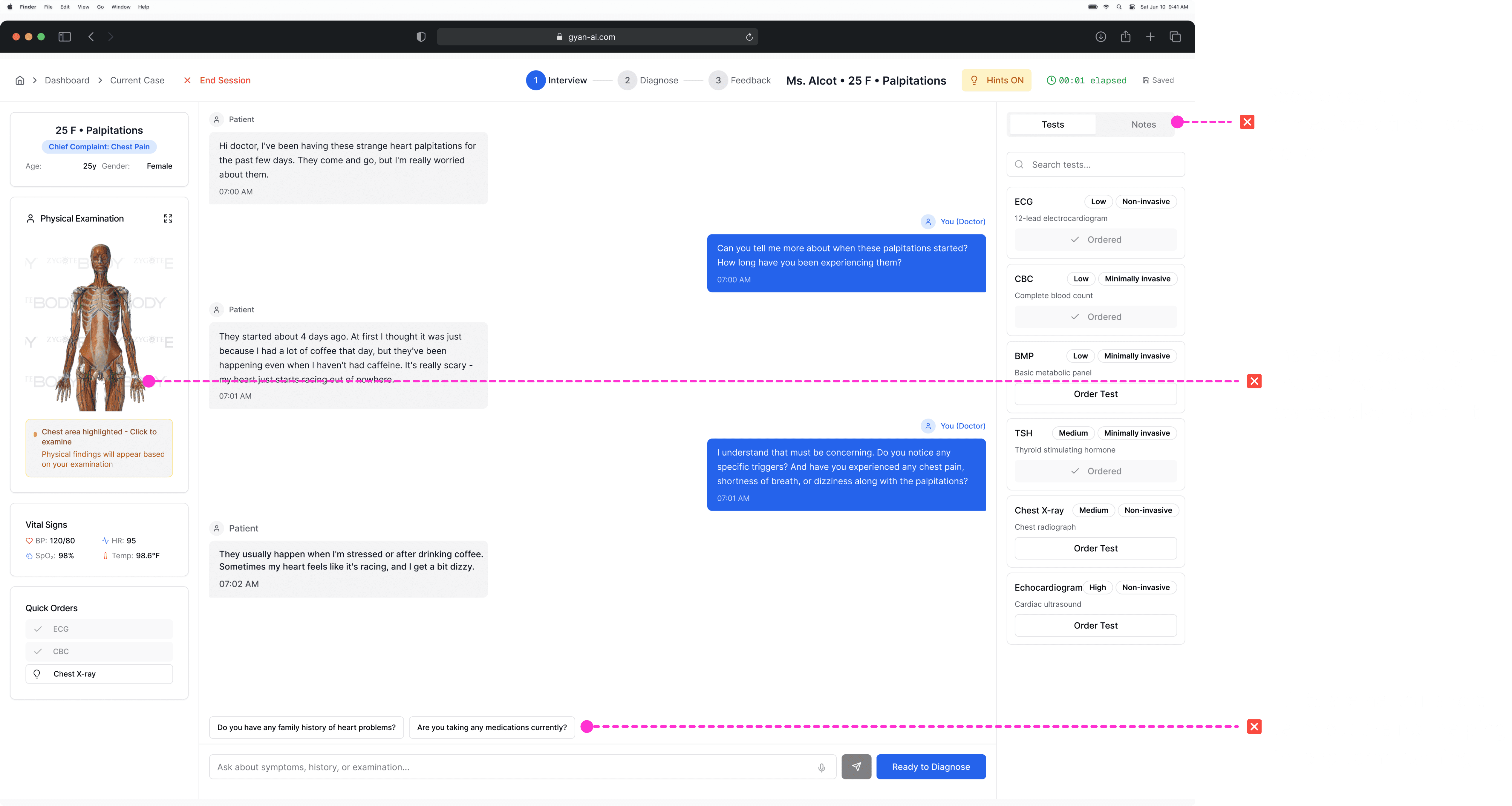
V2: A feature-rich clinical platform with anatomy, whiteboard and analytics
Feature rich has turned into feature fatigue. Users have not used many features and have seen 3D model as a play item than a serious diagnosis. The 3 step diagnosis has also added unwanted fatigue, resulted in time consuming practice.
FINAL DESIGN
Simplified conversation, diagnosis and reasoning to emphasize learning
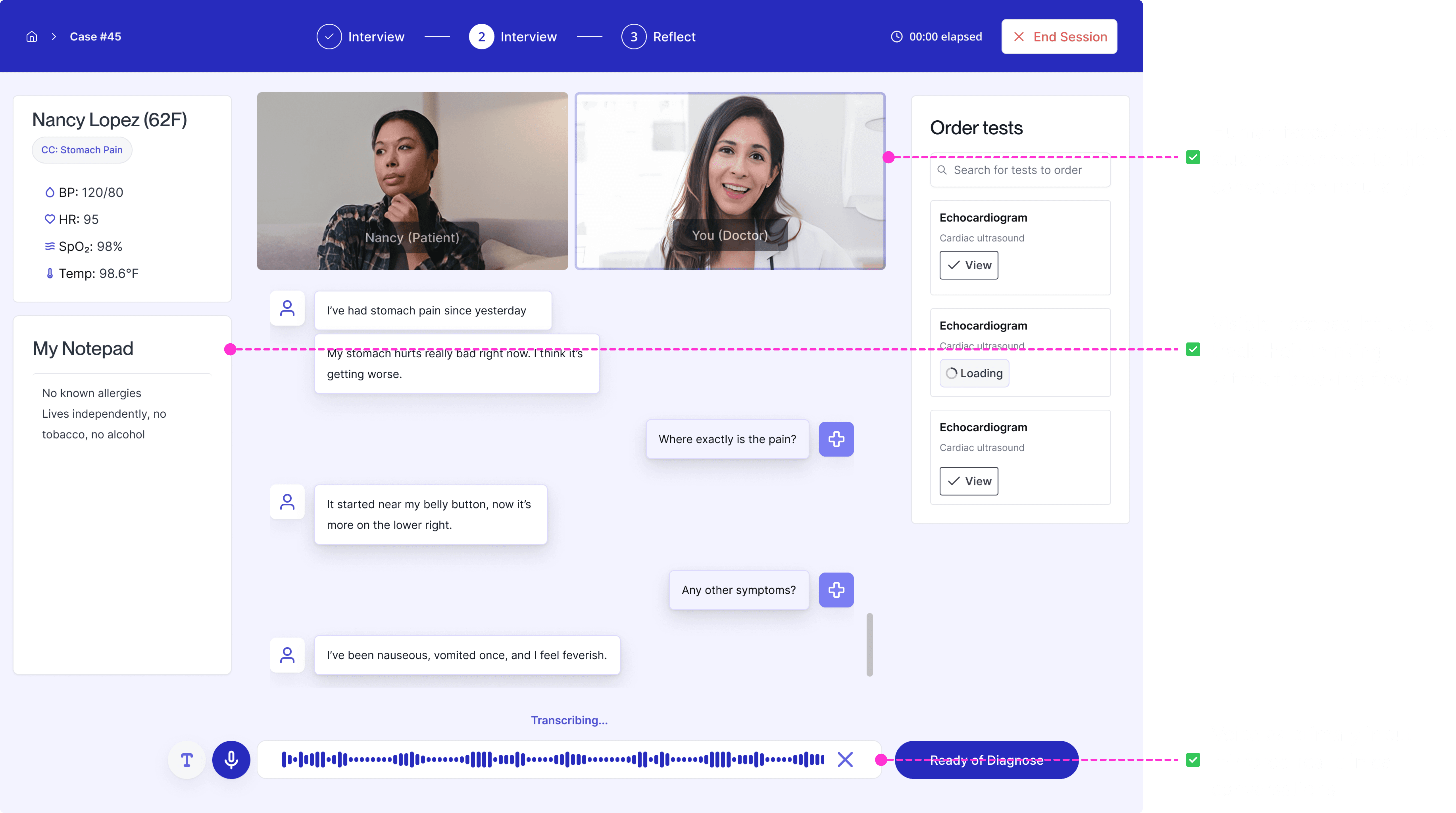
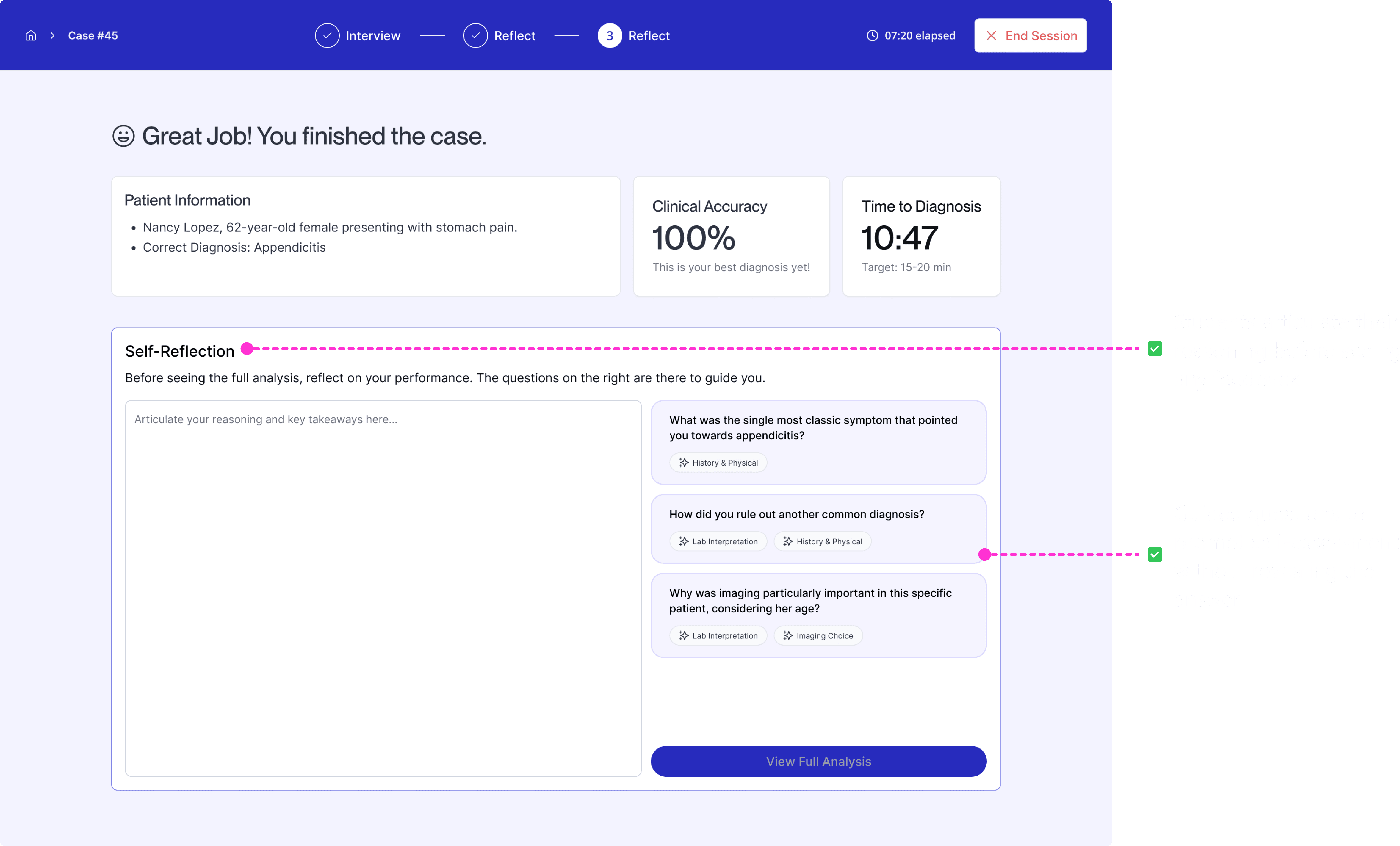
The final design removes complexity to keep students focused on the patient conversation. Removing hints and focusing on notes created space for clearer clinical reasoning, with reflection to articulate their thoughts before any feedback is given.

Interview Screen
Reflection Screen
Gyan AI – A platform that teaches to think like a doctor
A full walkthrough of the practice flow, from starting a practice case to receiving feedback from Gyan AI
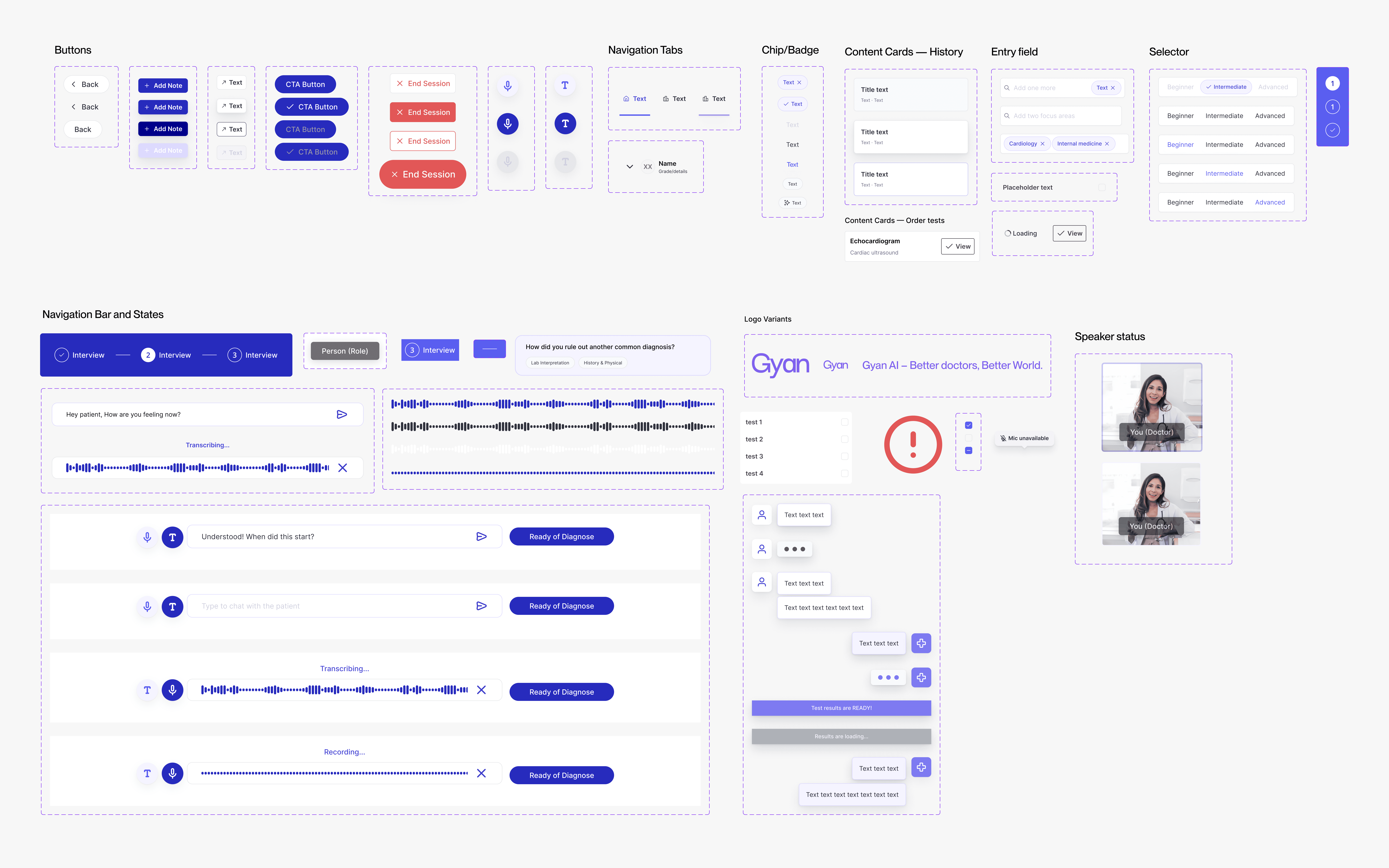
Design system built from scratch to support a clinical learning experience
A custom component library designed around Gyan's core interactions including voice input states, conversation patterns, diagnostic cards, and navigation, built to scale as the product grows
EARLY EXPLORATIONS
Some early design explorations
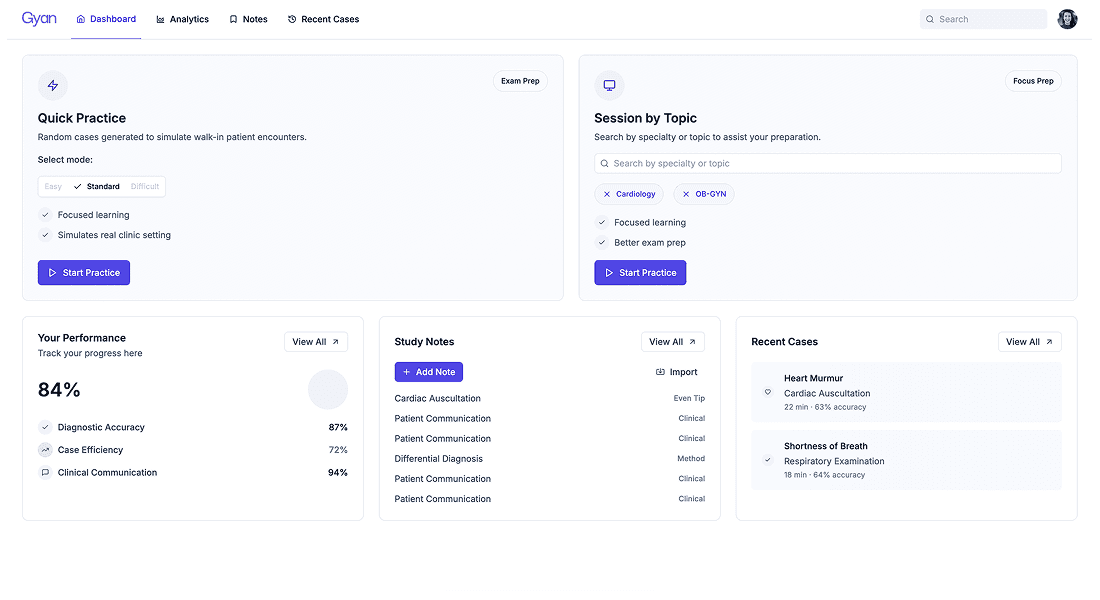
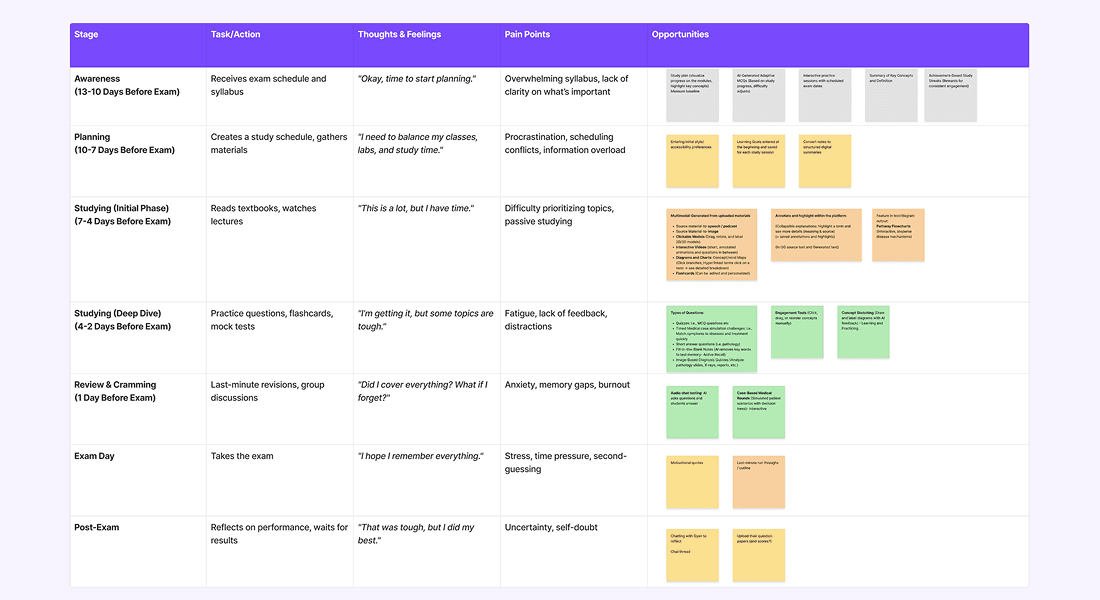
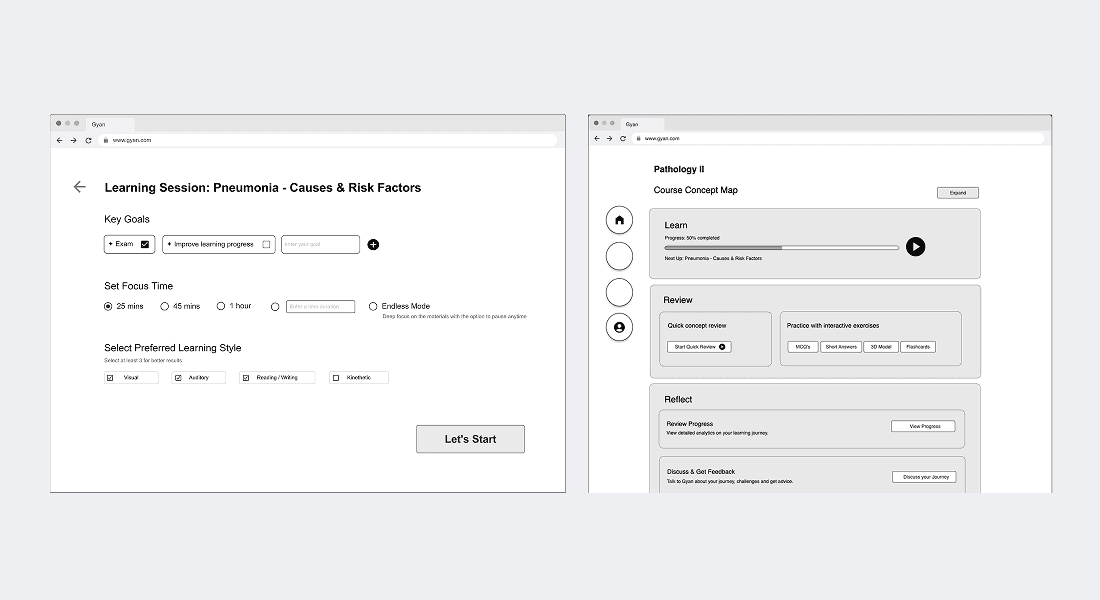
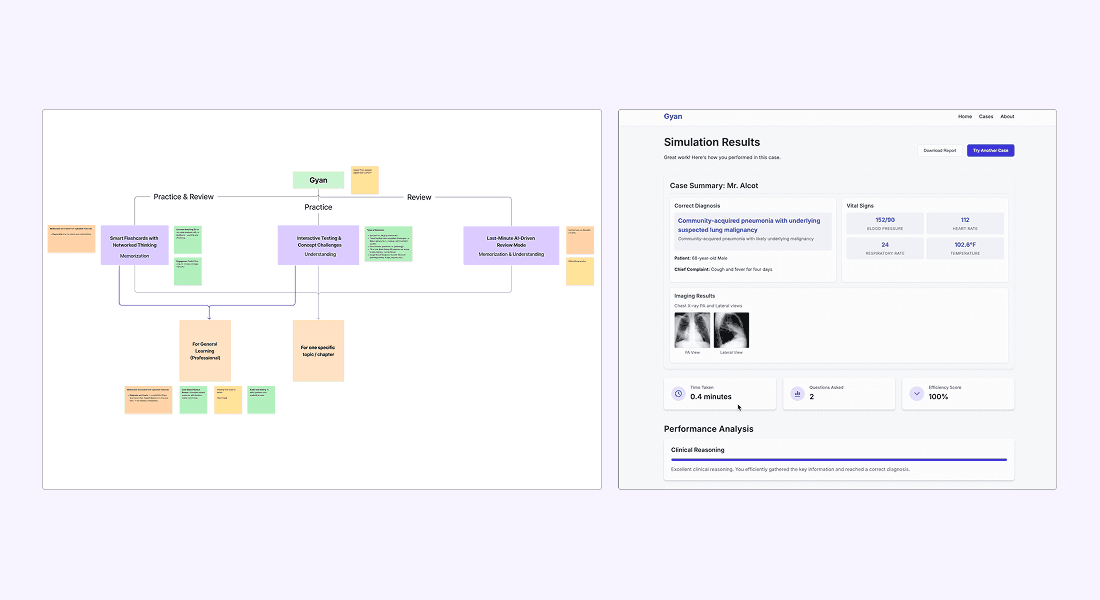
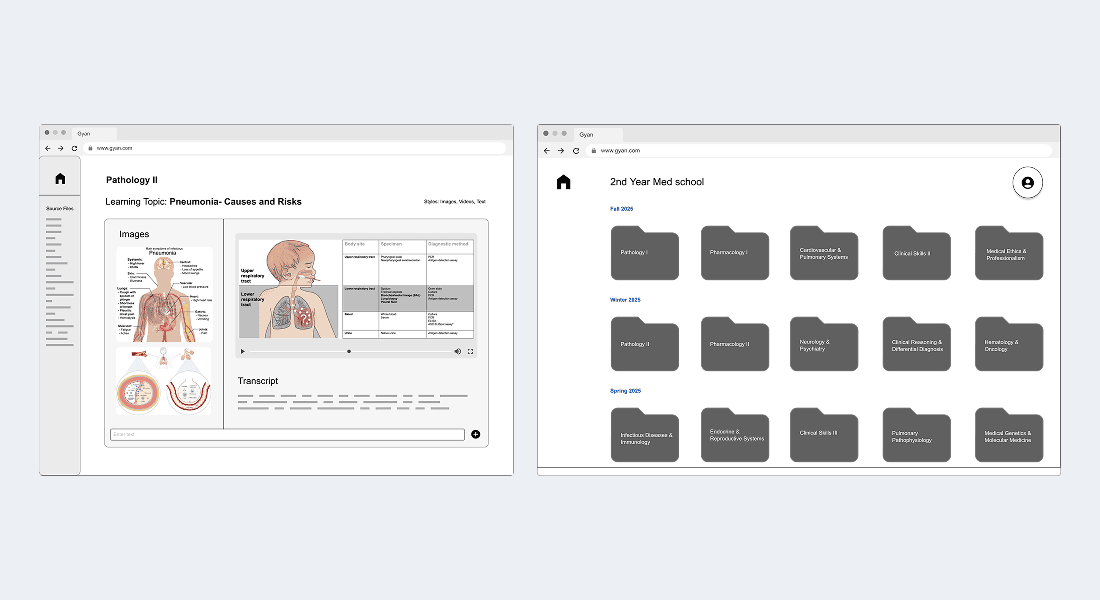
Below are some pictures of the design process, discovery, and other directions out team has explored in the journey to reach Gyan AI.
END OF PROJECT
My takeaways as a founding designer…
Friction-less ≠ Good design
The biggest learning was realizing that reducing friction isn't always right. Sometimes friction is what contributes to learning, like the reflection screen in our flow.
Study the domain very well
Medical accuracy added a layer of complexity. Understanding the such domain constraints earlier would have sharpened our design from start.
Test lo-fi with real users earlier
Testing at the mid-fidelity stage has limited our ability to implement some changes. Conducting earlier tests could have allowed us to make changes at the root level.